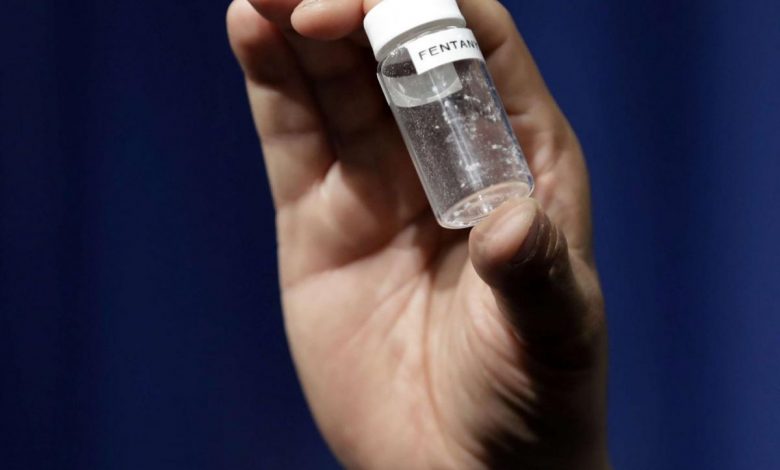
The opioid crisis continues to wreak havoc in the United States and threatens to spread to the rest of the globe. Particularly because of fentanyl, a synthetic opiate that is much more addictive than morphine or heroin. This molecule quickly penetrates the central nervous system and activates the nerve circuit there, causing a strong feeling of euphoria. In excess, this leads to respiratory failure, which cuts off the oxygen supply to the heart, causing heart failure that can be fatal. Today, 70% of overdoses in the US are associated with this drug. And even if drugs are available to treat addiction to this opioid, the relapse rate remains very high (nearly 90%). But a new approach could be a game-changer: a vaccine. Researchers from the University of Houston (USA) have tested a new specific vaccine against fentanyl in rats. Their results, published October 26, 2022 in the journal Pharmaceutics, show that their vaccine effectively blocks the molecules of this drug and thus avoids all of its negative effects.
Trick the immune system into producing antibodies against fentanyl.
This vaccine consists of hybrid molecules that mix fentanyl antigen (the open part of the molecule that antibodies can recognize) and an immunogenic molecule that will stimulate the immune system to produce antibodies. To enhance the immune response, the vaccine contains an adjuvant, as is the case with many vaccines currently available. Thus, the body produces antibodies that recognize fentanyl molecules as if it were a viral or bacterial protein.
These antibodies will then find the fentanyl and bind to it, causing the drug to remain in the bloodstream and prevent it from reaching the brain or other organs. Thus, the opioid can no longer stimulate the central nervous system and its effect is cancelled. The drug is then excreted in the urine.
About sixty rats (male and female) were immunized with this vaccine three times (0, 3 and 6 weeks) at doses of 0.05 mg/kg or 0.1 mg/kg. After vaccination, the rats received fentanyl (or morphine to make sure the vaccine is fentanyl-specific) and their behavior and physiology were compared to those observed when the same rats received these drugs before vaccination.
The vaccine blocks the effect of fentanyl on the central nervous system.
The analgesic effect of fentanyl was tested by bringing the animal’s tail to a heat source or placing it on a hot stove and measuring the reaction time. The lowest dose of vaccine (0.05) was sufficient to block the analgesic effect in the first test (the rat flicked its tail away from the heat source as quickly as in the absence of the drug), but a higher dose was needed to completely eliminate the analgesic effect. analgesic effect for the second test.
The vaccine also blocked the negative effect of the drug on the behavior of the animal. To test this, the rats had to activate a lever to get food after turning on a light signal, a maneuver they had been taught beforehand. Typically, a dose of 0.1 mg/kg fentanyl completely incapacitates rats to perform this exercise. But the vaccinated rats did well without any problems (even if the females showed some decline in their abilities despite the vaccination).
The vaccine prevents fentanyl from reaching the brain and preventing breathing problems.
In unvaccinated rats treated with fentanyl (0.1 mg/kg), there is a significant decrease in blood oxygen saturation (up to 68%, while in the norm it is above 90%). This emphasizes respiratory failure, which leads to a drop in cardiac activity. However, in vaccinated rats, blood saturation and heart rate were normal.
At the end of the experiment, the brains of the rats were removed to measure the amount of fentanyl that had penetrated. Brain levels of this drug in vaccinated rats were 90% lower than in unvaccinated rats, suggesting that these physiological and behavioral differences were indeed caused by fentanyl blocking by antibodies that prevent the drug from entering the brain. brain. Moreover, the researchers showed that these antibodies are specific to fentanyl and do not recognize other opiates such as morphine or methadone. This means that patients who have received this vaccine can be treated for pain with one of these alternatives. So the next step is to test this vaccine in humans in the hope of finally finding an effective treatment for fentanyl addiction.