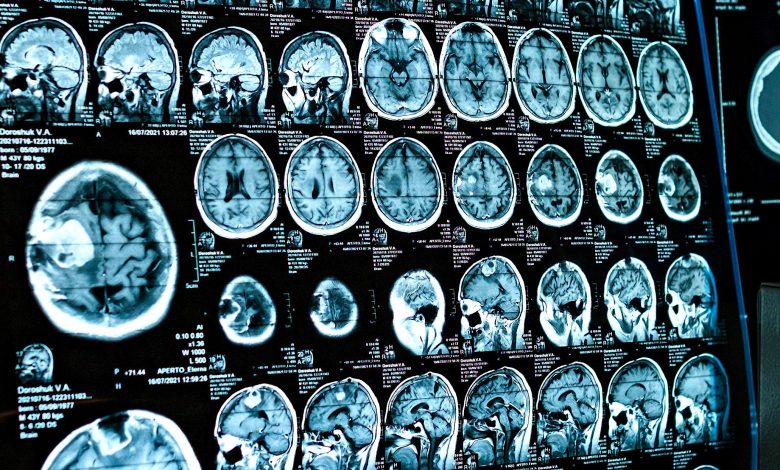
Since the beginning of the COVID-19 pandemic, much research has focused on better understanding how the virus affects our bodies in the long term. Some, in particular, have found that even a mild infection with SARS-CoV-2 causes changes in the structure of the brain, including a decrease in its volume. A new study looking in particular at the impact of pandemic-related stress shows that adolescent brains show signs of early aging, according to post-pandemic MRI scans. While it remains to be seen what the implications of these changes are, these results show one of the pandemic’s hidden effects on young people and the extent of the psychological impact.
In previous studies, MRI of the brains of patients infected with COVID-19 showed structural abnormalities even long time (more than 6 months) after infection. These structural changes will have consequences ranging from anxiety to mood disorders, and will also increase the incidence of neurological disorders such as stroke, cerebral hemorrhage, and dementia (more common in severe cases).
Most research on the neurological consequences of SARS-CoV-2 infection has focused primarily on adults, with few focused on the impact on children and adolescents. With the latter, the most common post-infectious manifestations will be inflammatory lesions of the brain (encephalitis, acute encephalomyelitis), spinal cord (myelitis), cranial and spinal nerves (neuritis).
This new study, published in the journal Biological Psychiatry: Global Open Science, is one of the few studies looking at the psychological impact of the pandemic on adolescents. This is indeed a critical stage in life when the brain undergoes a drastic restructuring, causing profound physiological upheavals. It is then interesting to understand how the COVID-19 pandemic can cause neurological changes in adolescents who are already undergoing profound natural changes due to puberty.
Changes likely related to stress
In adolescents, sudden changes in brain architecture are such that the limbic system develops much faster than the prefrontal cortex. This is one of the reasons why we often see risky behavior in teenagers because the prefrontal cortex does not have enough control over the search for immediate rewards.
According to a new study by scientists at Stanford University, these changes would typically be more significant after a pandemic period with signs of premature aging. To arrive at this result, the researchers compared the MRI results of 81 adolescents between November 2016 and 2019 (before the pandemic) with those of 82 other adolescents between October 2020 and March 2022 (during the pandemic and after restrictions were lifted). .
After sorting 64 volunteers from both groups and distributing them by age and gender, the researchers found that cortical thinning, hippocampal and amygdala growth were higher in the analyzed group after the pandemic. This process, normal for all adolescents, would accelerate, as if the brain were aging faster.
According to scientists, the difference in brain age will be about three years compared to the group that performed MRI before the pandemic. “We didn’t expect such a large increase given that the incarceration lasted less than a year,” said Jan Gottlieb, professor of psychology at Stanford University and lead author of the study.
Suspecting early effects of stress, the researchers also assessed whether adolescents (in the post-pandemic group) might show symptoms of depression and anxiety. Participants then self-reported more severe mental health problems, such as increased anxiety and internalization problems.
“Deteriorating mental health is accompanied by physical changes in the brain of adolescents, likely due to the stress caused by the pandemic,” says Gottlieb. According to the expert, these results are consistent with the results of previous studies on the impact of the pandemic on adolescents. However, researchers do not yet know how these rapid changes may affect them. It is possible that the consequences could be negative, but so far there is nothing to indicate that they cannot be positive, for example, by making the brain more resilient. In addition, some of the accelerated changes reported by the research team were associated with higher performance on intelligence tests.
In addition, since the brain is an incredibly plastic organ, especially at a young age, things can turn out differently, and changes can disappear over time. Large-scale imaging of the brain also fails to provide detailed information about small neural circuits. As a next step, the researchers plan to reanalyze participants (showing post-COVID changes) in their 20s to learn more.